

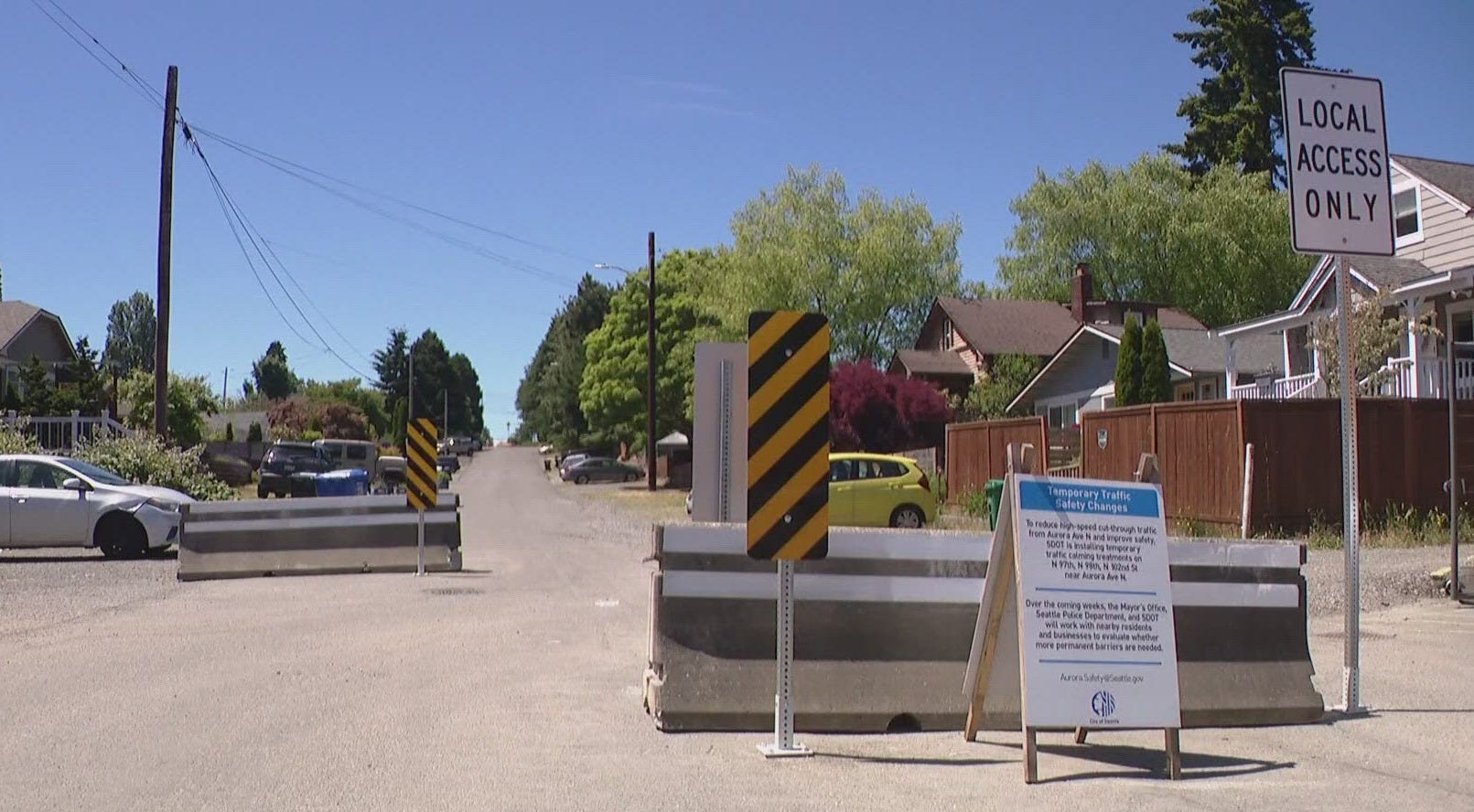
A bill to formalize street closures along the Aurora corridor was voted through Tuesday’s Public Safety Committee meeting. Last month, some people living on the side streets of Aurora, Seattle’s hub for street-based sex work, blocked off their neighborhood with large planters after a flare-up of shots-fired incidents in May. The city removed the planters and replaced them with traffic-slowing measures instead.
Councilmember Debora Juarez, who represents the district where Aurora is located, noted that the mayor is already authorized to close streets this way, but committee members hoped to distinguish these road closures for gun violence from barricades for traffic or events specifically.
The bill implies a relationship between the Aurora residents’ four-day closure and a reduction in area gun violence. However, it’s just as likely that any perceived drop was coincidental. The May outbreak of gunfire notwithstanding, there was a 23 percent decrease in shots fired in the beats that house the Aurora corridor in the first half of 2026 compared to 2025, according to official crime data. Shots are down 33 percent relative to 2024.
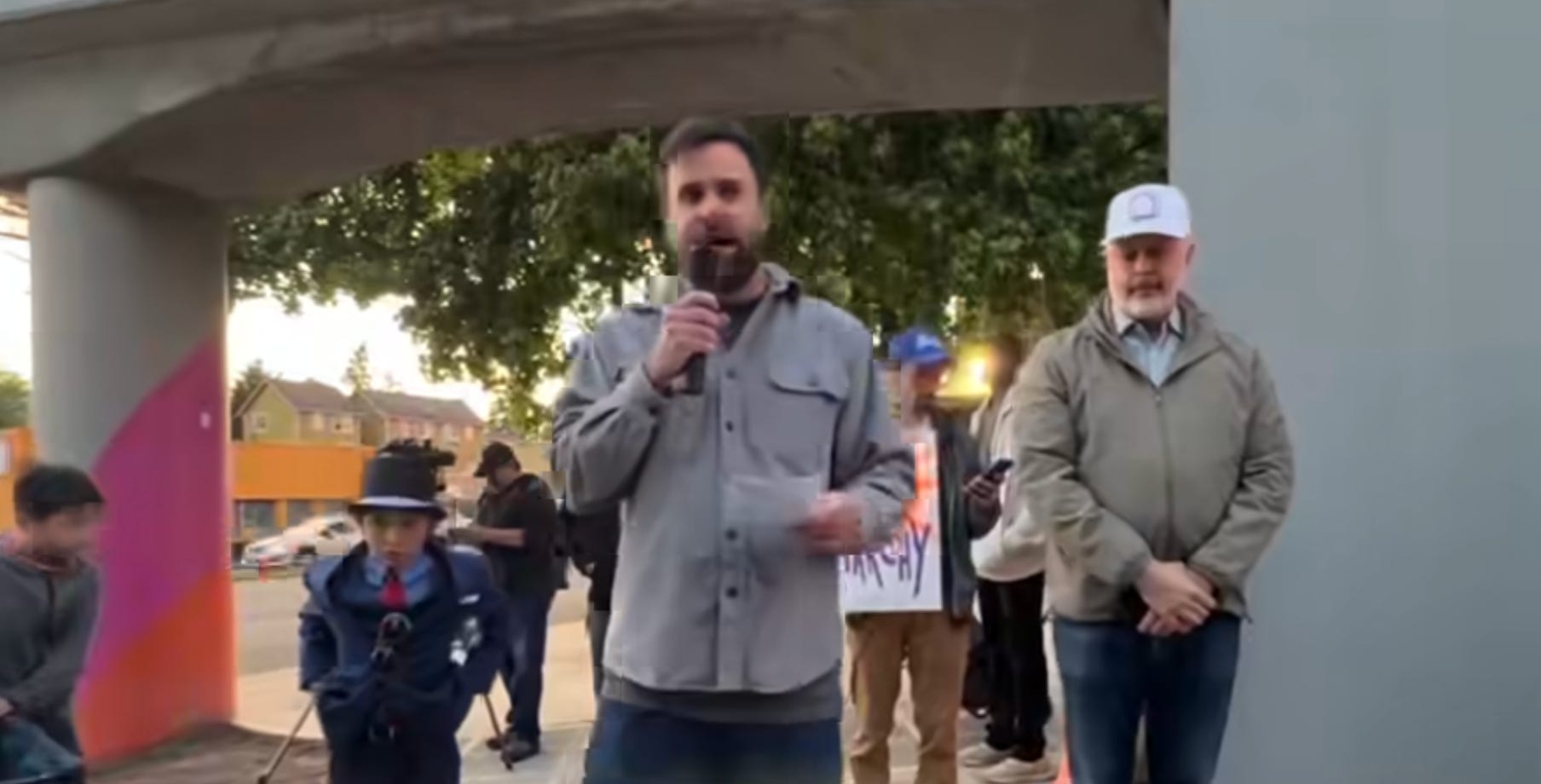
At the meeting, committee members and public commenters thanked Public Safety Chair Bob Kettle for attending a march by Aurora residents earlier this month. Kettle stood behind one of the organizers, Jake Wallack, as he called for the National Guard to be deployed. Wallack, whose house was struck by a stray bullet in May, is also an executive at Axon, the company that makes the city’s Real-Time Crime Center software and cameras that line Aurora Ave (as well as SPD’s body-cameras and Tasers).
Kettle also thanked the FBI for taking part in a joint “outreach” operation with the Seattle police along Aurora recently, harassing sex workers, and no doubt stoking fear with increased federal agent presence, especially given it was bookended by ICE operations along Aurora as well.
Not all Aurora residents share the view that an expanded police presence or closed streets are the solution to gun violence. The group of residents blocking streets is conveniently aligned with the most pro-police members of the council (and right-wing pressure groups like Change Washington). At public comment, other residents argued that blocking streets funnels more traffic down adjacent streets3 which is dangerous for pedestrians. Some have made the case that supportive services and decriminalization are the path to public safety, not expanded police presence and roadblocks.
More concerning still is that this Aurora situation sparked discussion of multiple locations for a “satellite precinct” in the north end. One public commenter spoke in favor of a satellite precinct at 97th and Aurora, which is only about eight blocks from the existing North Precinct.
Juarez responded to the commenter, saying there was $200 to 300 million “set aside” for an Aurora precinct proposed back in 2016. She bemoaned the Block the Bunker movement that prevailed against her vote in favor. Kettle said that the previous council lineup “would have passed” that vote.
Later in the meeting, Juarez brought this up again, saying she’s been working with the police and Chief Barnes for a satellite precinct in Lake City. Referencing the 2016 Block the Bunker movement again, she said she “learned a lot” from that and the consent decree, adding “that’s why I voted how I did on the cameras.” She said the “community asked for cameras,” conveniently forgetting the many meetings where community members were removed from chambers for their strong opposition to the cameras.
With SPD already hoovering up just under half a billion dollars and posturing for more, and the city deep in the red, there are few funding sources the City Council can divert for potential satellite precincts. Maybe they’ll tap the remainder of JumpStart housing funds not already being spent on the stadium CCTV cameras. Or perhaps they’ll gut one of the few remaining supportive services to pay for whatever type of police expansion they go with on Aurora, so it might be a good time to dust off those Block the Bunker signs once again.
Hey, before you go…
DivestSPD is your only source for critical police coverage in the Puget Sound. From filing public records to reading hundred-page reports, we’re putting in the hours to bring you weekly exclusive stories about cops brutalizing the public, committing crimes, and violating civil rights.
We also get all of our funding from ordinary people like you. If you think this work is valuable and you want it to continue, join our Ko-Fi community today. Tiers start at just $5 a month.
"Send in the National Guard!" says man whose job depends on people overreacting to crime out of fear to sell surveillance.
I saw an Axon Wifi SSID across the street from me the other day and had noticed a new camera, so apparently they also provide traffic cameras (this one in particular is pointed at a crosswalk/stoplight on an arterial near a school).
Is this supposed to be reporting? Reads like a weak opinion piece. And I know you’re not touting crime stats while you’ve also been skeptical in the past of police crime data, way to talk out of both sides of your mouth. Go tell north Seattle residents they’re overreacting and to look at the data lmao