

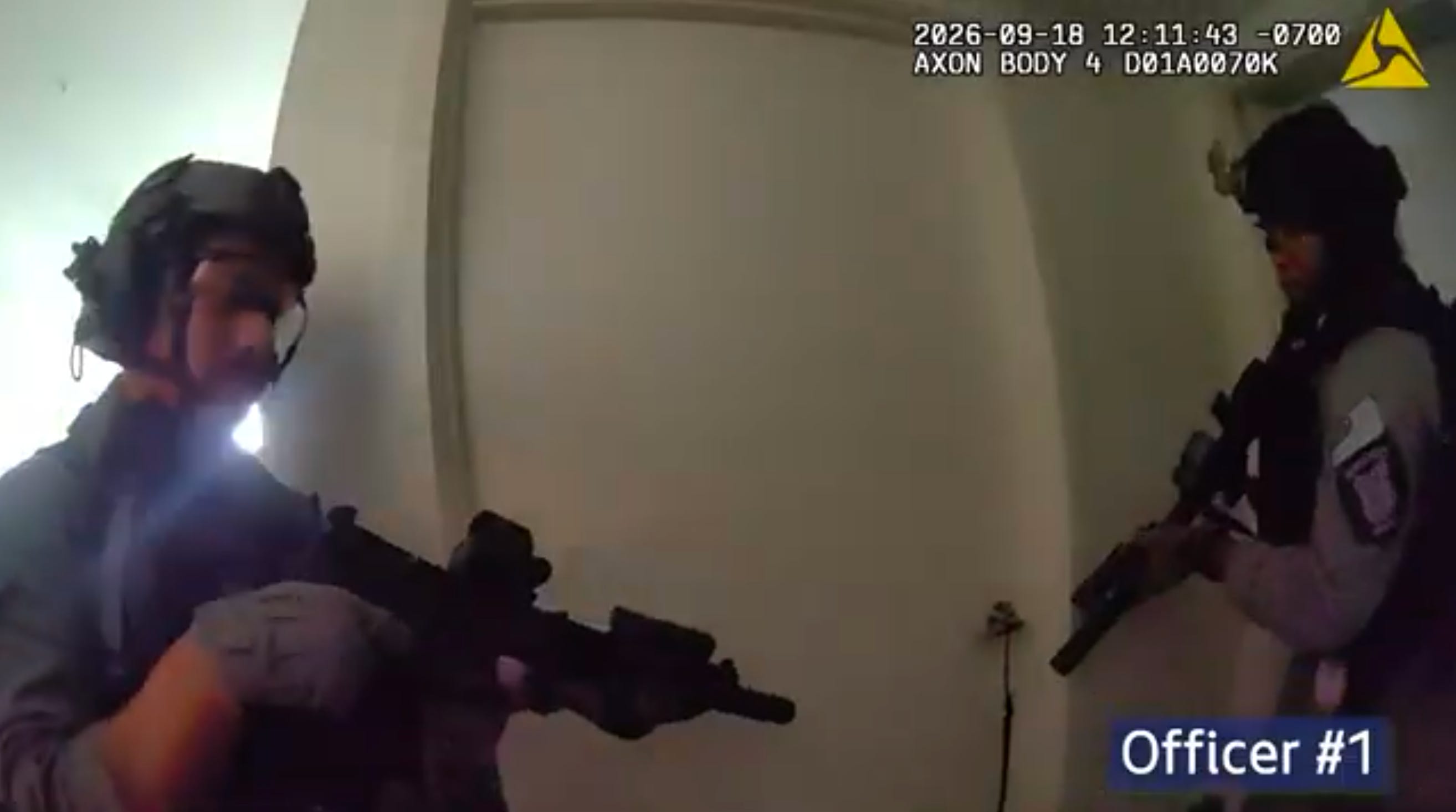
DivestSPD has identified the Seattle police officer who shot a woman in Beacon Hill earlier this month as junior SWAT Officer Jose Jimenez. He nonfatally shot the woman, who was experiencing a mental health crisis, inside her apartment while attempting to arrest her for domestic violence assault.
On Sept. 18, officers were dispatched to a domestic violence incident at around 8 a.m. and found a man with an injury to his face, according to a Seattle Police Department release. The woman retreated into her apartment, and police received a judicial warrant to enter hours later.
A team consisting of Jimenez, another SWAT officer, and several patrol officers entered the apartment around noon. The woman was inside the bedroom with the door closed. Though SPD claimed the woman was “barricaded,” the apartment door was cracked open and her bedroom was unlocked. Officers briefly tried to speak with her from the living room, but there appeared to be a language barrier.
A video SPD released shows Jimenez and the second SWAT officer moving to the hallway outside of the bedroom. The woman opened the door partially, and the officers began ordering her to show her hands. She waved her phone in her left hand, but her right hand was concealed behind the door.
Jimenez appeared to push the door open, and the woman swung a tire iron at him, and he fired one round. Jimenez continued pushing into the room before K9 Officer Anthony Ducre, who was standing behind him, grabbed his vest and pulled him back out.
No attempt to negotiate
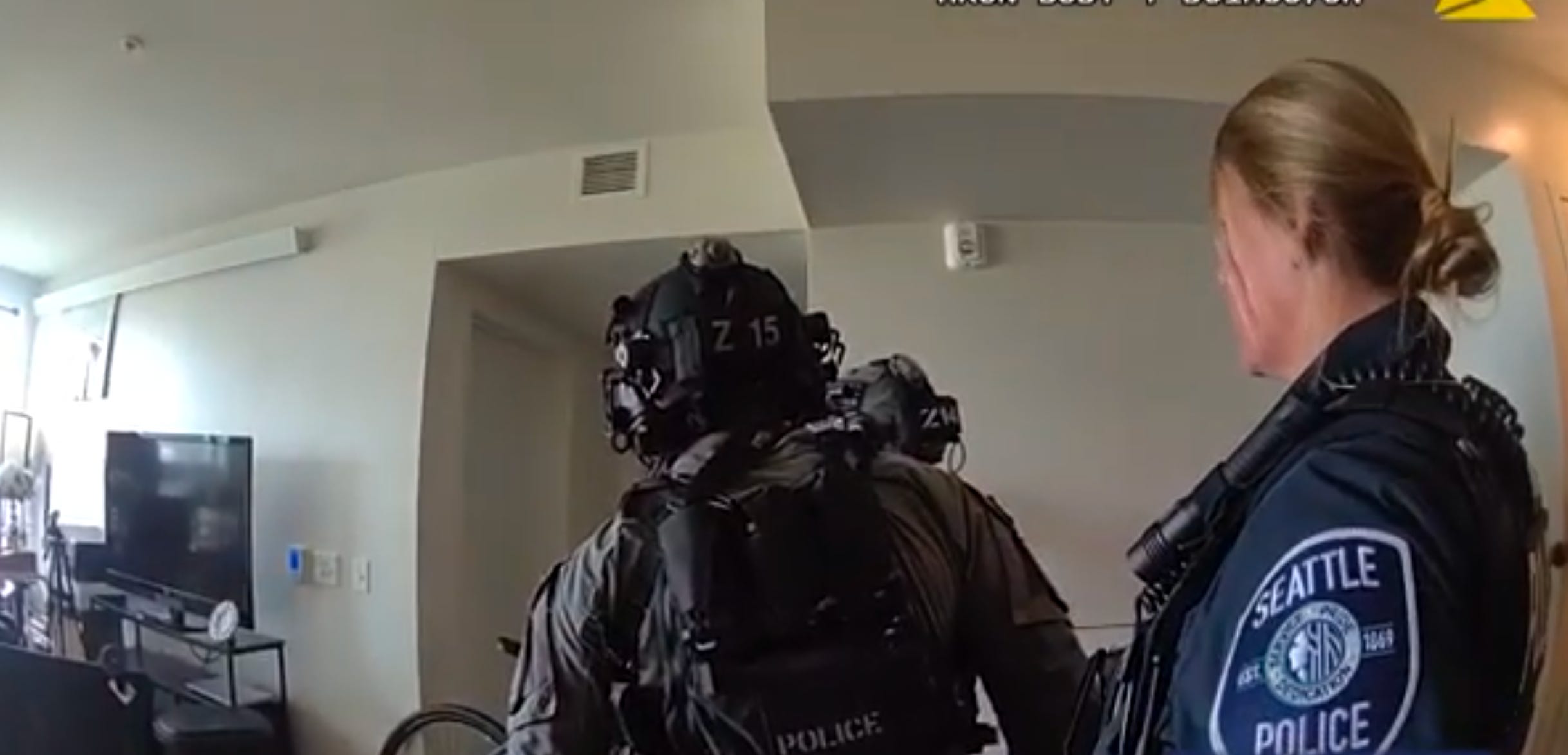
As DivestSPD pointed out in our analysis of the shooting, Jimenez and other officers at the very least violated the department’s deescalation policy. As defined in the force policy drafted under the federal consent decree, deescalation means to use time, distance, and shielding to minimize the likelihood of force.
At the time, it was not urgent to take the woman into custody. She was alone inside the apartment and not a threat to anyone other than herself. They could’ve used the time to definitively establish what language she spoke and brought in an interpreter. According to call data, two negotiators were on the scene, as well as at least one member of SPD’s crisis response team and a community service officer. Notably, no members of the CARE team were involved.
None of those resources were used.
Instead, officers closed the distance in five minutes without formulating a plan or assigning less-lethal roles. They only discussed using Tasers at the last minute, shortly before the woman opened her door. At that point, the only options were the rifles Jimenez and the other SWAT officer carried in their hands.
A new SWAT officer with a history of escalation
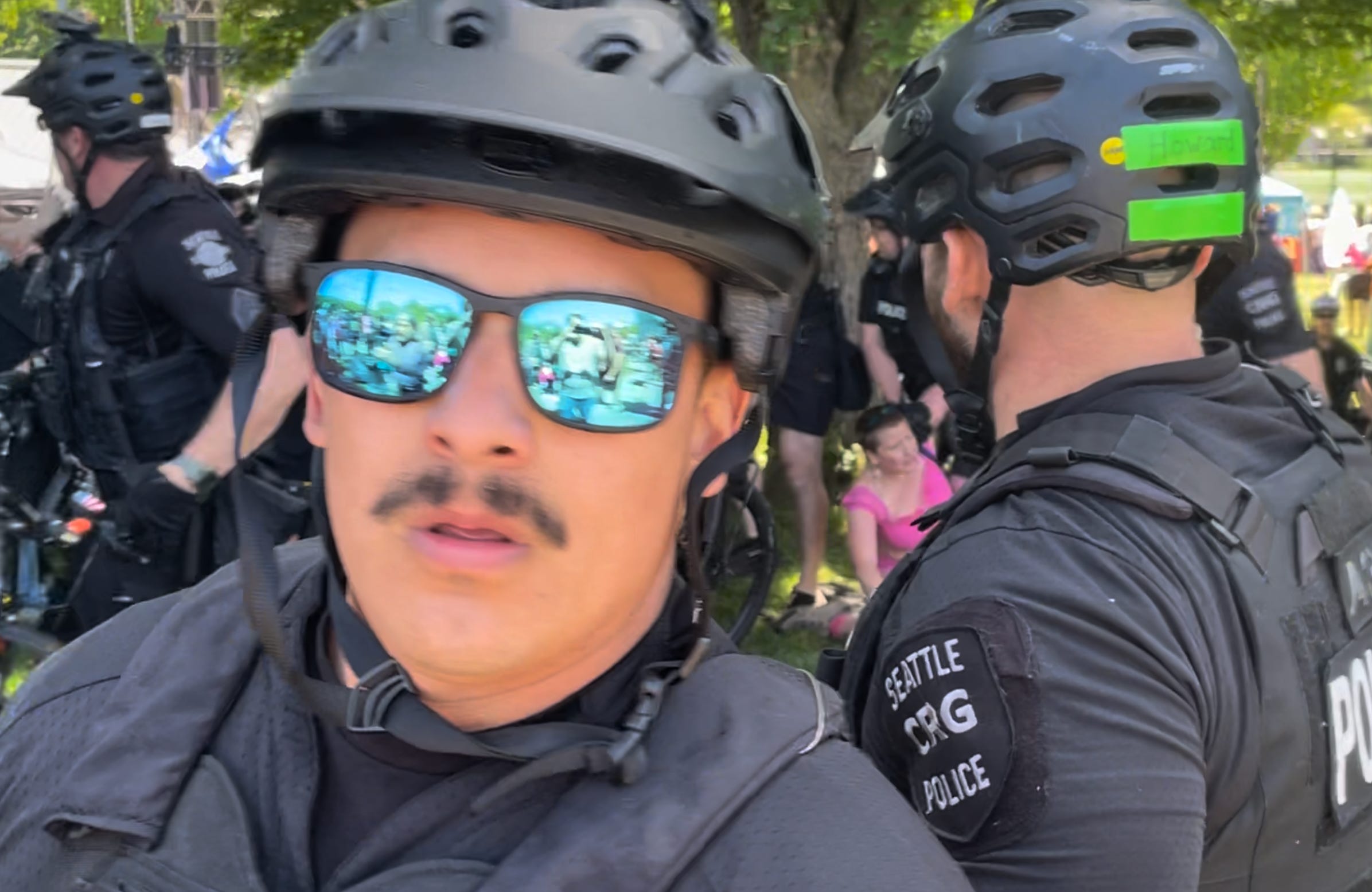
Hired in 2019, Jimenez has only been a full-fledged officer for less than six years. He completed his probationary period during the George Floyd protests and worked in the East Precinct before being reassigned to the Community Response Group, a so-called problem-oriented policing and anti-protest unit. In 2026, he was reassigned again to the SWAT team.
According to SPD force records, Jimenez tends to use relatively high levels of force. Nearly half of his reportable force in his career has been Type 2, meaning Tasers, pepperspray, and other forms of force that cause more than “transient pain.”
Jimenez averages about two complaints for excessive force annually, and internal investigators found policy violations in several of these incidents:
Jimenez and another officer grappled with a homeless woman while arresting her for trespassing on a property to urinate. During the struggle, her breasts were exposed in front of several onlookers. The Office of Police Accountability noted that there was no reason for Jimenez to immediately go “hands-on” and engage in “prolonged physical interaction that drew bystanders to the scene.” The agency faulted Jimenez for not slowing down, talking to her longer, and waiting for more officers. Jimenez received a training referral.
During the 2020 protests, Jimenez and another officer pepper-sprayed protesters and pelted them with blast balls from behind as they were walking away. The OPA found that the protesters were “not actively threatening or causing harm to officers at the time.” Jimenez was reprimanded. He was one of the few officers to face discipline for force from that period.
During the May Day protests in 2021, Jimenez swatted away a cellphone on a selfie stick. The OPA sustained allegations against Jimenez for violating the protestor’s right to film, but he was not disciplined for this incident.
In 2022, Jimenez shoved an elderly woman. She was attempting to approach her husband, who was being arrested on the ground. Anotther officer had the situation under control, but Jimenez intervened, pushing her forcefully. This escalated the small crowd that had gathered nearby. Jimenez was, again, given a training referral.
Aside from his record of escalation and high levels of force, Jimenez is unusual in other ways. Namely, he’s much younger and less experienced than a typical SWAT team member. More than two-thirds of the SWAT team were hired before 2010. Typically, officers accumulate nearly a decade of experience before they’re assigned to the unit.
The shooting is currently under investigation by the King County Independent Force Investigation Team, or IFIT-KC. Jimenez makes $159,036 base pay plus overtime.
Hey, before you go…
DivestSPD is your only source for critical police coverage in the Puget Sound area and beyond. From filing public records to reading hundred-page reports, we’re putting in the hours to bring you weekly exclusive stories about cops brutalizing the public, committing crimes, and violating civil rights.
We get all our funding from ordinary people like you, so if you think this work is valuable and want it to continue, join our Ko-fi community today. Tiers start at just $5 a month.