

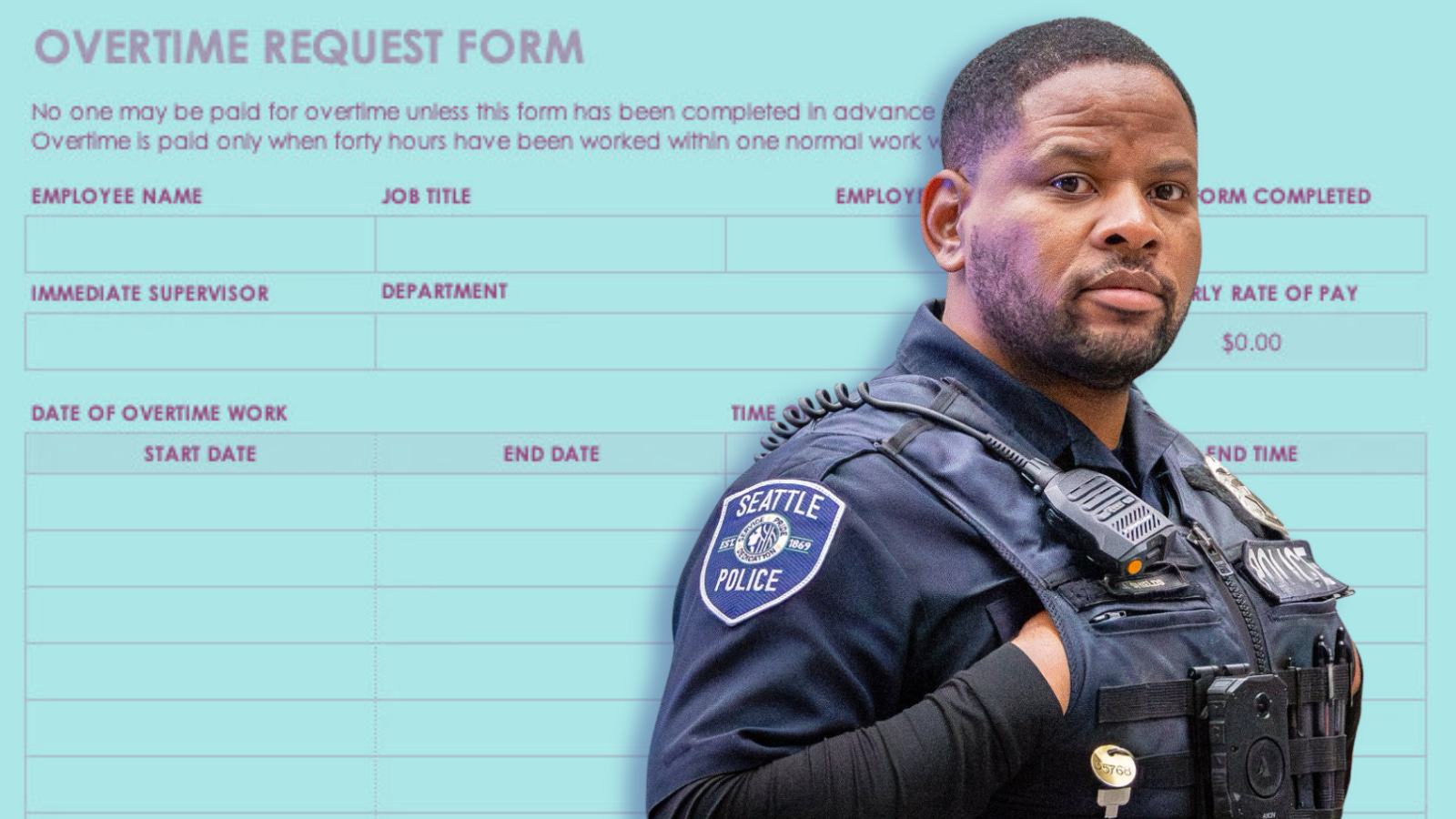
Two Seattle police officers were paid for a combined total more than 80 overtime hours they did not work, according to reports the Office of Police Accountability released last Friday. Officers left before their overtime shifts ended but submitted slips saying that they had worked a complete shift.
West Precinct Officer John Shields prefiled his overtime request forms and left work anywhere from 10 minutes to over three hours early on nearly 30 shifts, according to one disciplinary report. North Precinct Officer David Foley, who retired before the investigation finished, routinely left 90 minutes to two hours before his overtime shift ended but claimed to have worked the full shift, a separate investigation found.
The OPA argued that it could not prove Shields had criminal intent to defraud the city, noting that in some instances, he worked more hours than his overtime requests showed. However, he was overpaid considerably more than he was underpaid. Shields was paid for around 42.5 unworked hours and not paid for 9.75 hours that he worked.
I tried to prioritize the wellness aspect of it and just come in at – you know, when my body, like, allows me to.
Shields was “at best, extremely lax or, at worst, reckless in tracking and recording his time,” the OPA wrote. There were also “discrepancies” in the start times. Shields explained he sometimes prefiled his overtime request and showed up late for an overtime shift: “When I signed up, I told the sergeant I would be there at 0400. I tried to prioritize the wellness aspect of it and just come in at – you know, when my body, like, allows me to.”
Sergeant Accused of Abusing 'Wellness Hour' to Avoid Duty

One of the Seattle Police Department’s highest-paid sergeants was accused of abusing a pilot wellness program to shirk duty, according to a report released on Friday. Anh Koah Hoang, a field supervisor on first watch, was reportedly unreachable for around two hours, leaving an acting sergeant to assume his duties. According to employee records, Hoang ha…
For violating the department’s timekeeping policy, Shields was suspended for 27 hours, which is 5.75 hours less than the net amount of overtime hours he was overpaid.
Shields was previously given a training referral after an anonymous complaint alleged that he was “deeply sleeping” in a parking garage. Though the OPA found he had been logged onto a call that he didn’t respond to, rendering him unavailable for three hours, it ostensibly did not have enough evidence to sustain the allegation.
‘The way it’s always been’
While Foley was paid for only slightly more unworked hours, the OPA found more evidence of intent, so the Seattle Police Department opened a criminal investigation. The detective interviewed all of Foley’s sergeants, including Sgt. Paige Maks, who is consistently one of the department’s top overtime earners and made over half a million in 2024 (she was also suspended for sleeping in her cruiser).
Maks told the detective that she was unaware of any of her officers logging off before the times written on their overtime sheets, adding that they’re “all adults.” In the report, the detective wrote Maks “insinuated” that she trusts the officers under her supervision to submit accurate overtime slips.
In his later OPA interview, Foley claimed that Maks was shocked when she learned of the criminal investigation and that she told him it was “standard practice” to allow officers who worked overtime to augment shifts to leave early. She denied this.
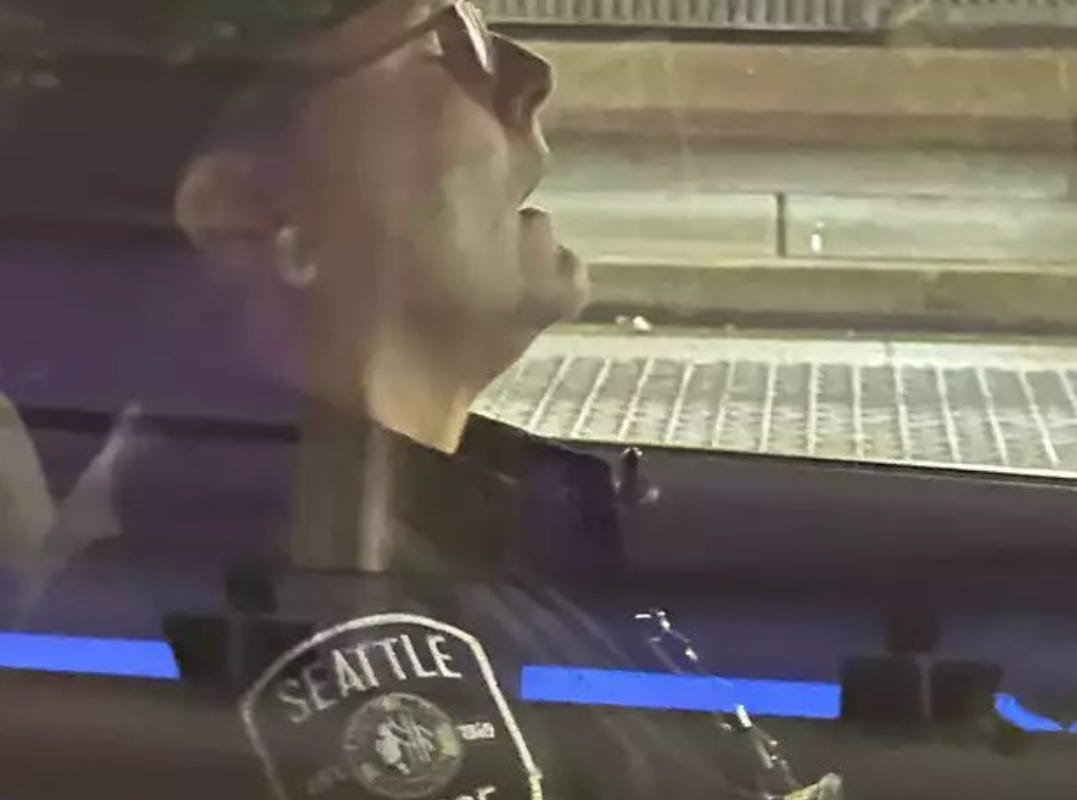
Foley agreed to a voluntary interview with the detective. He told the detective that it was an “accepted practice” to leave at 7 pm and claim overtime until 9 pm. The detective summarized his statements as “ other officers do it as well, and it’s the way it’s always been.”
He said that he did this with the approval of his supervisors Sgt. Joseph Renick and Sgt. Shane Burditt. But Burditt and Renick, who were both investigated alongside Foley, denied giving him permission to leave early and claim the full shift. Still, one said he was aware that some officers log off CAD early with “permission or implied permission,” but that was 45 minutes at most.
The detective spoke to another supervisor who wasn’t named in the complaint. They said that the lieutenant at the precinct gave sergeants discretion to release their officers as early as third-watch roll call, which happens at 7 pm. Though Foley was paid over $5,000 he did not earn (potentially a first-degree felony), the detective found there was not probable cause to charge him.
While it is certainly reasonable to presume a supervisor can allow an employee to leave an overtime shift early, it is unreasonable to assume the employee could claim—or a supervisor could authorize—unworked overtime hours.
Foley’s sergeants had corroborated, in part, his statements that this was an “accepted practice,” and the lack of oversight Maks described “made it possible Foley’s behavior was never corrected.” Therefore, the detective wrote that she did not have proof Foley “willfully and wrongfully intended to deprive the city of services.”
The King County prosecutor’s office did not charge Foley. The decline letter read: “This timecard discrepancy problem at [Foley’s] Precinct appears to be prevalent. However, it appears to be more of an administrative rather than a criminal matter.”
While the OPA found that Foley may have had a “technical defense” against a felony theft charge, it still sustained the allegation that he violated city and department policy. Under the collective bargaining agreement, he can only claim overtime for the hours he worked.
The OPA wrote: “While it is certainly reasonable to presume a supervisor can allow an employee to leave an overtime shift early, it is unreasonable to assume the employee could claim—or a supervisor could authorize—unworked overtime hours.”
If Foley had not resigned, he would have received a 30-day suspension, even though the OPA also sustained dishonesty allegations, the penalty for which is “presumed termination” under the police guild contract.
The honor system
Maks and Shields’ supervisor, Sgt. Justin Bedford, both received training referrals. Like Maks, Bedford admitted to signing off on Shields’ overtime requests without scrutiny, trusting him to submit accurate slips.
Bedford said it would be impractical to monitor all his officers' entries and logins, given that he was sometimes the only supervisor and had as many as 14 officers under him at once. At the same time, Bedford admitted to signing Shields’ overtime requests for days when Bedford was absent for training and other overtime requests when he had no way of knowing how many hours officers worked.
The police department is still without a modern time-keeping system — officers don’t punch in and out on a time clock — so the only way to catch time theft is by cross-referencing building access cards and CAD logins. This is an onerous task for supervisors, leading to poor supervision and ample opportunities for abuse.
In 2024, the OPA recommended implementing an overtime-tracking system, but SPD declined, citing “citywide operational issues with Workday,” the beleaguered payroll software the city adopted that year. The police guild and several other city unions have filed unfair labor practice complaints against the City of Seattle about the software, alleging that it does not track hours or overtime properly.
Officer John Shields made $233,897, and Officer David Foley made $354,939 in 2024.