

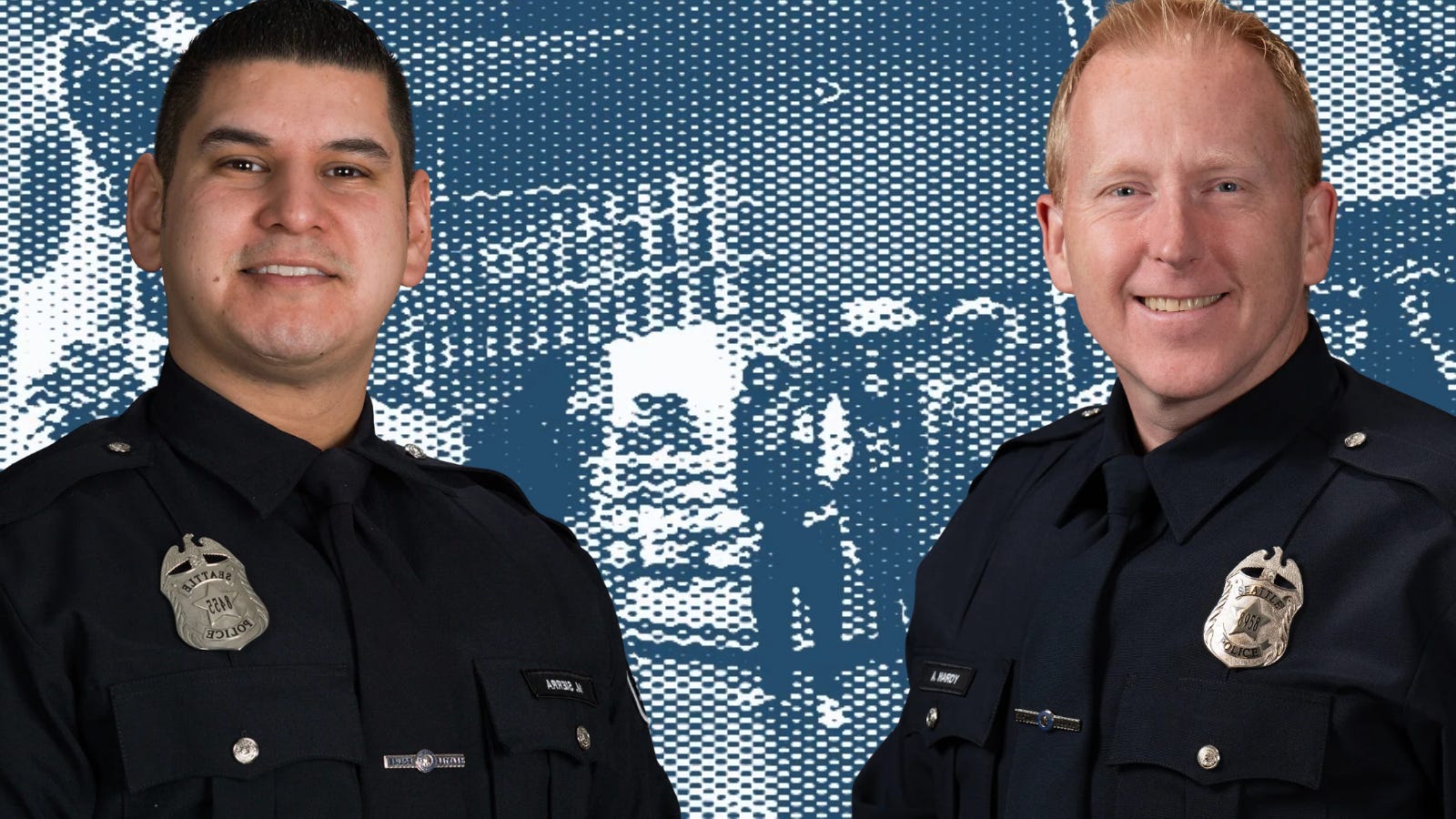
The Seattle Police Department has long had issues with wrongfully stopping and harassing Black people. They’ve been sued for it multiple times, and racial bias in stops was one of the reasons the federal consent decree was imposed in 2012.
The decree was lifted last year, but old habits die hard. Two cases the Office of Police Accountability released earlier this month show the department still has a long way to go.
In the first, Officer Mark Sierra detained two Black men on a bus in South Seattle. He was looking for three Black children who got on the 106 after throwing rocks at cars.
The witness provided detailed descriptions of the boys’ clothing, age, and height. All three wore masks. The boys were about 12 or 13, and spoke with Nigerian or “African” accents. They boarded a bus numbered 7006.
Sierra entered bus 7070, where he found two Black adult men seated far apart in the back. They couldn’t possibly be mistaken for children. One was 36, and the other was 29. Both had facial hair, and neither wore masks or spoke with an accent.
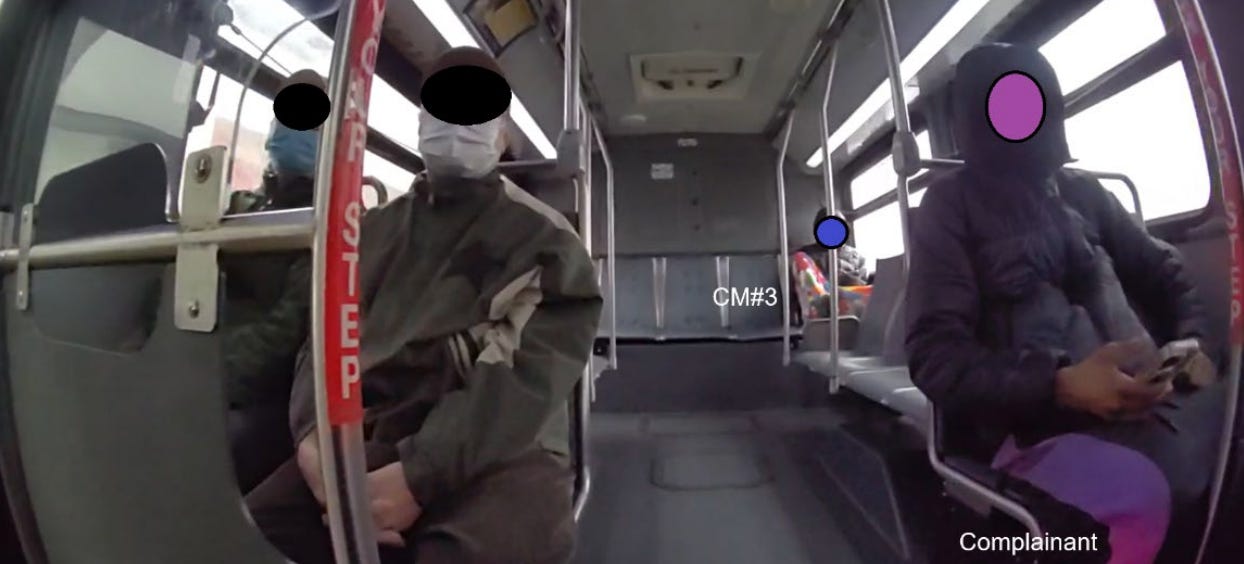
Their clothing didn’t match either. Sierra said he believed that at least one of the men’s sweaters matched the description. The suspect was described as wearing an orange coat. The man had a red hoodie with a large Snoopy print on the front.
The OPA found that Sierra’s stop was unlawful but argued that it was a mistake made in “good faith” as he hurried to stop an assault suspect. He was given a reprimand.
A few years back, officers made a similar “good faith” error. They detained and interrogated a 13-year-old Black child for half an hour, when the suspect was in his mid-30s.
In the other case, Officer Aaron Hardy responded to a call about two men harassing people outside a QFC. One was reportedly on a bike and had a gun. Hardy spoke to witnesses, who said that the suspect went up the street.
Though witnesses initially reported both men as Black, a store witness said one suspect was Cambodian and in his 20s. Hardy went inside the store and stopped a Black man wearing a distinctive Mickey Mouse jacket. None of his clothing matched the suspects’ descriptions, and he was nearly 50 years old.

Hardy handcuffed and frisked the man, who was understandably angry at being detained. When the man accused Hardy of stopping him solely because of his race, Hardy scoffed, “It has nothing to do with it. Don’t give me that bullshit.” He released the man after running his ID. It came up clear of warrants or any criminal record.
The OPA found Hardy’s detention was illegal, arguing that his reasonable suspicion “rested on generalized characteristics of two Black males—one of whom wore a unique identifying feature—located near the reported location.” Hardy claimed that one of the witnesses gestured with their head toward the QFC. The video only captured them pointing up the street.
He was given a written reprimand, the second-lowest discipline.
Hardy previously worked at the King County Sheriff’s Office, but he was fired during his probationary period for performance issues, including a lack of emotional intelligence and leadership skills. Hardy was described as “arrogant” and hostile to corrective advice. He worked in private security for the next decade, earned a master’s degree from the ultra-conservative Liberty University, and then landed a job at SPD.
While these are just two examples, research shows that SPD disproportionately detains Black and indigenous people. Black people were seven times more likely to be stopped than white people, and indigenous people were nine times as likely. The pattern has persisted for decades.
Hey, before you go…
DivestSPD is your only source for critical police coverage in the Puget Sound area and beyond. From filing public records to reading hundred-page reports, we’re putting in the hours to bring you weekly exclusive stories about cops brutalizing the public, committing crimes, and violating civil rights.
We get all our funding from ordinary people like you, so if you think this work is valuable and want it to continue, join our Ko-fi community today. Tiers start at just $5 a month.