


Can there ever be enough cops? A cop says no

Folks, we called it. Immediately after the Bite of Seattle shooting, DivestSPD warned that business interests and mainstream media would capitalize on the tragedy to drum up support for more cops and increased surveillance. Of course, we can’t take too much credit for predicting the most predictable thing ever. Last week, the Seattle Times reported about the supposed understaffing at the event. The number of officers at Seattle Center had been reduced from 50 in 2025 to 39 this year on the day of the shooting. When KIRO7 asked former King County Sheriff John Urquhart if he thought 11 more police officers at the Bite of Seattle would have prevented the tragedy, Urquhart declined to speculate. Notably, officers were in the immediate vicinity — they responded in seconds — and the shooting happened in front of the SPD command center located in the Armory. He did, however, connect the reduction in officers to general SPD understaffing.
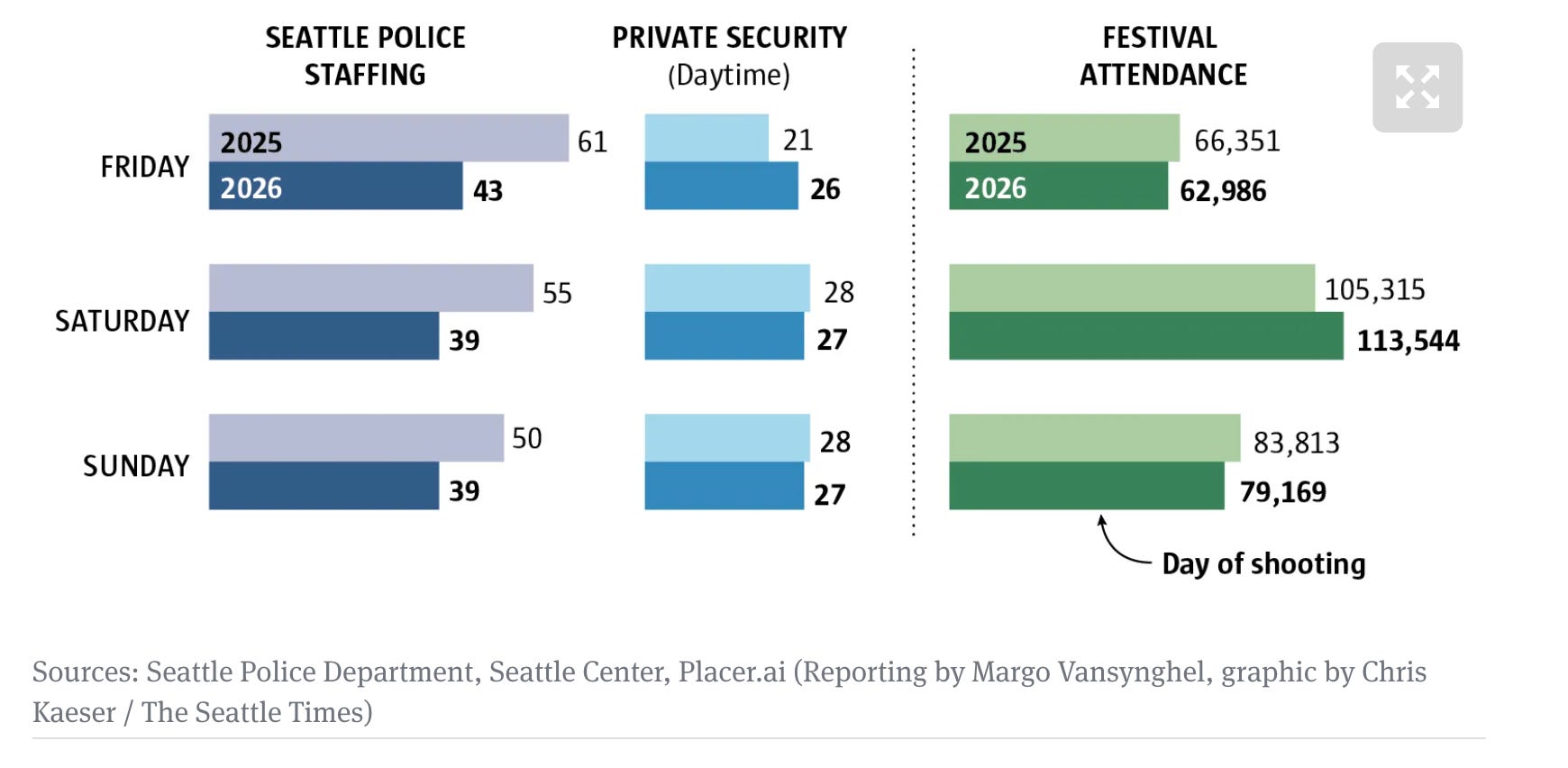
This is doubtful. According to the July 2026 roster, the Seattle police had more deployable officers on patrol than it did last year, meaning the decision to assign fewer officers wasn’t forced on command by a lack of cops. Urquhart segued into doomsaying about the dire risks of understaffing, warning that slow response times could mean a person might die before an officer arrives. But median police response times are on target, meeting SPD’s seven-minute goal. Lowering hiring standards to fill up the department with any warm body is dangerous (we know that former Chief Shon Barnes did this, and his replacement will likely continue to do so). Once they’re under the protection of the police guild contract, cops are virtually impossible to fire, so unqualified or poorly selected hires can damage communities for years if not decades.

Surprise! Sus Chamber poll finds voters support the Chamber’s sus agenda

While businesses and the media have been pushing pretty hard for more cops in the wake of the Seattle Center shootings, these efforts pale in comparison to the consent manufacturing operation unleashed this week in support of cameras. Every news outlet in town, from KOMO to KIRO, has been touting the results of a new public safety poll from the Chamber of Commerce and Challenge Seattle, which (supposedly) found that roughly three out of four Seattle voters back surveillance expansion. The Seattle Times reported that the poll showed a “near-unanimous demand” for expanding surveillance, increasing the number of cops on the streets, shutting down “open-air drug markets” and sweeping encampments within 72 hours. It’s a masterful piece of propaganda from the Chamber of Commerce, presented as definitive proof that the vast majority of voters are in lock-step with the Chamber’s public safety agenda, but are they?


The pollster used less reliable, self-selecting email and text-based polling, and the results weren’t weighted for race or income. There’s no description of how respondents were recruited, so, for all we know, it could have been a survey of 500 well-to-do white people. The questions were also highly loaded. Opponents’ concerns about civil liberties were summarized in a sentence, while the survey described in painstaking detail the supposed benefits of cameras and even cited a department-commissioned study that found Real-Time Crime Center-assisted investigations “were three times as likely to result in arrest.” The survey rebutted concerns around privacy, civil liberties, and misuse, noting that “significant privacy protections [are] in place” and reassuring respondents that video would be monitored by civilian staff, not police officers. In short, the survey got the results it was designed to get.
Anti-surveillance activists get a look at the Big Board
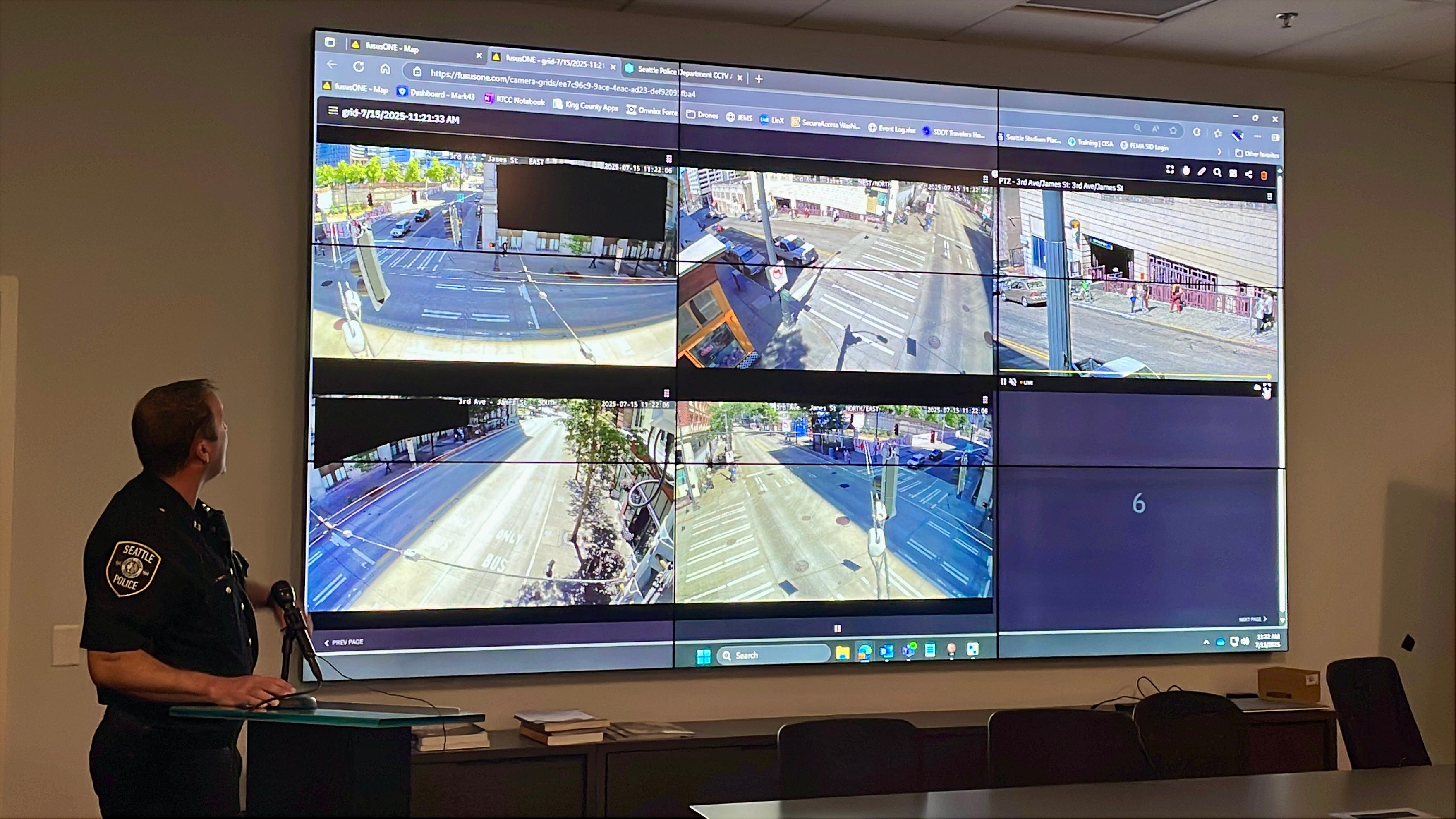
On Monday, members of the Community Not Cameras Coalition toured the Real-Time Crime Center, where feeds from hundreds of surveillance cameras around the city are integrated. While activists described the storage and retrieval of footage as safe and secure, they argued that “there are no technological safeguards” to prevent Axon, the manufacturer of the RTCC equipment, from pulling footage without SPD’s knowledge. Axon can also update their software at any time, but they have agreed verbally with SPD not to enable any new features by default. There’s also little oversight of RTCC analysts. A monthly spot check of 10 randomly selected searches is the only defense against abuse.

Considering that technologies are available to monitor systems like these, the omission seems either purposeful or negligent. One coalition member, Noah Williams, “expressed deep concern regarding the lack of automated anomaly detection in the system audit logs, a key mechanism of catching administrative abuse.” In addition to its critique of RTCC operations, Community Not Cameras also opposes Axon’s partnership with SPD to provide body cams, Tasers, and drone countermeasures. In the last two years, the total value of Axon contracts with the city exceeded $7.3 million. Community Not Cameras is encouraging people to sign a letter demanding that the Seattle City Council invest in violence prevention rather than surveillance technology. They’re calling for the city council to approve an amendment that redirects CCTV expansion funds to community violence interruption ambassadors and restores funding for community-based restorative justice programs. And in the 2027 budget, they’re asking for city leaders to shift surveillance spending to community violence prevention.
Violence intervention—but make it carceral

Speaking of violence prevention, one of the more productive things to come out of the Bite of Seattle shootings has been a renewed interest in alternative methods to reduce shootings and homicides, but the devil is in the details, as they say. Councilmember Maritza Rivera, a landlord and one of the more conservative members of the city council, is proposing a $417,000 two-year consultancy with the National Network for Safe Communities focused on reducing gun violence using the Group Violence Intervention strategy. The basic pitch coming from the NNSC research center is this: a small fragment of the population, responsible for about half of gun violence, can be identified and then receive both outreach and deterrence through community members working with social services professionals and police to offer support, guidance, and information on the consequences of criminal activity.
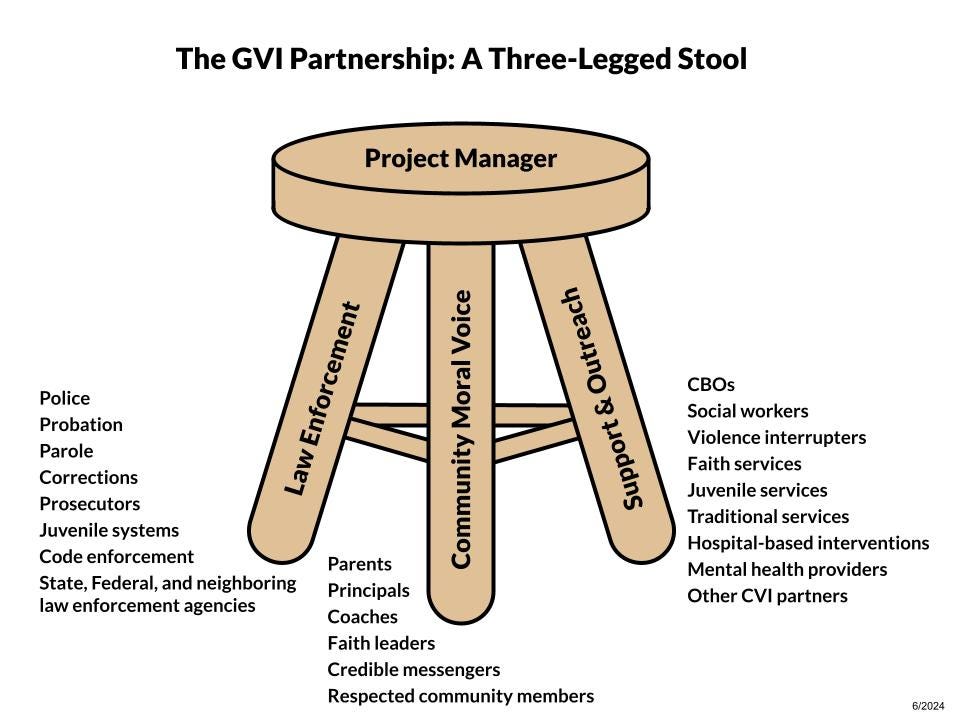
This model has gained traction recently, following its massive, highly publicized success in Baltimore, which posted its lowest homicide numbers since the 1970s this year. There’s a lot to like about NNSC’s model, including its emphasis on mentorship and social services, but it has one major flaw: police are an integral pillar of its deterrence strategy. Police are heavily involved in “notifications” and “call-ins” where gang members are brought in and warned about what will happen if they continue to be involved in illegal activity. Reminiscent of “scared straight” programs, these stick-and-carrot interventions can break down community trust. Other forms of non-police community violence interruption, like hospital-based interventions and fellowship models, are more effective.
Hey, before you go…
DivestSPD is your only source for critical police coverage in the Puget Sound area and beyond. From filing public records to reading hundred-page reports, we’re putting in the hours to bring you weekly exclusive stories about cops brutalizing the public, committing crimes, and violating civil rights.
We get all our funding from ordinary people like you, so if you think this work is valuable and want it to continue, join our Ko-fi community today. Tiers start at just $5 a month.