


‘Right’-sizing the SPD

Just how many cops does the Seattle Police Department “need?” About 660 officers on patrol, according to a consultancy former Chief Shon Barnes hired. That’s about how many patrol officers SPD had in 2020, before the mass exodus of cops who got their feelings hurt by the George Floyd protests, refused to take the jab, or retired because they were getting “too old for this shit.” At a budget briefing on Thursday, city analysts cited a report by Meliora, former interim Chief Sue Rahr’s firm, which estimated that 660 was the magic number based on SPD’s call volume. Ideally, the report said, officers should spend only about 60 percent of their time responding to calls for service.
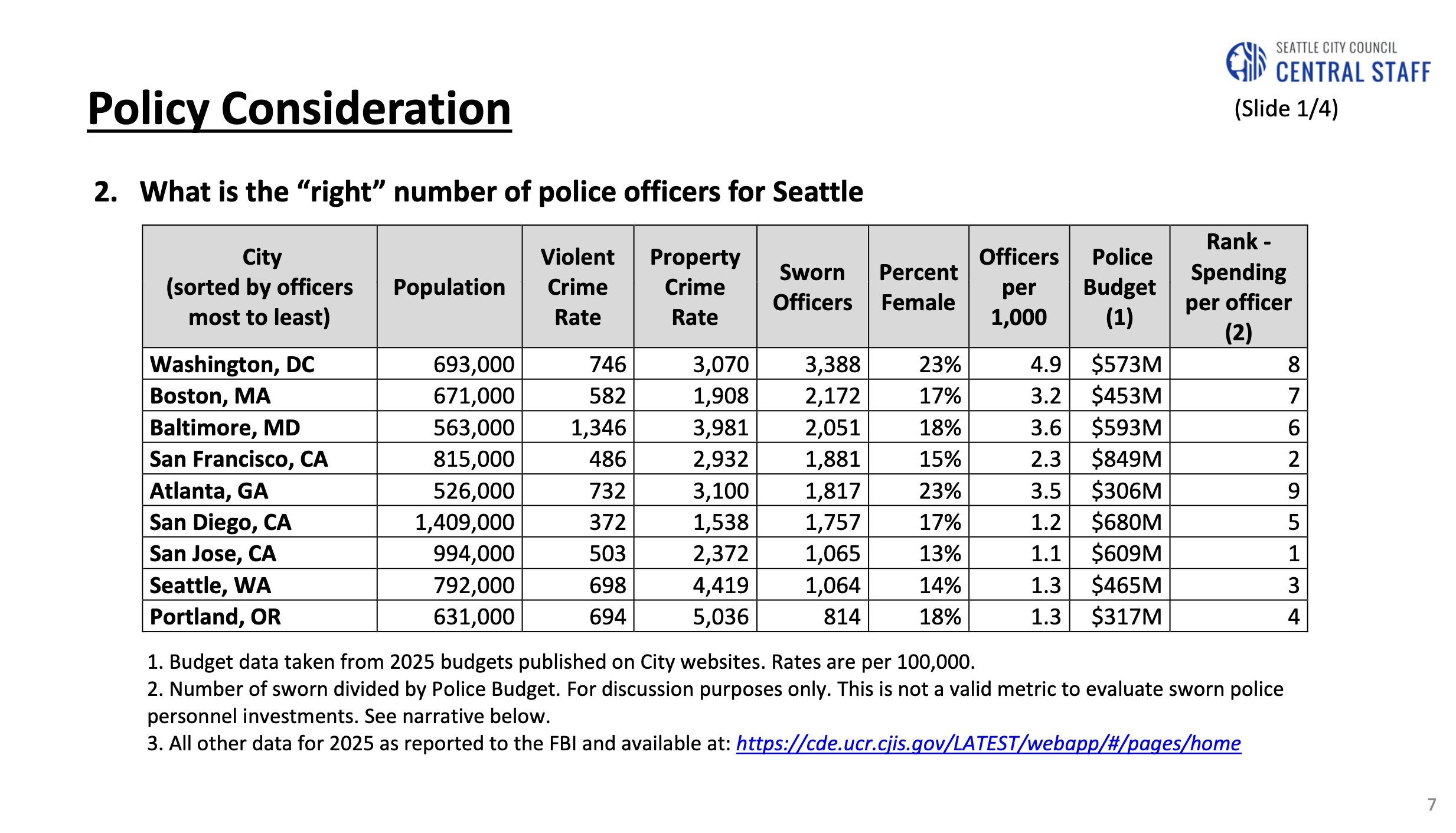
With all its new hires, SPD is on track to hit that in about a year. According to the latest roster, roughly 140 student officers are in field training, and 67 recruits are in the academy. Of course, that’s not enough for Public Safety Chair Bob Kettle, who put out a petulant press release, calling the mayor’s $68 million increase to the police budget “an ‘Unfund’ budget,” adding that it’s “as if the lessons of the ‘Defund’ era half a decade ago have not been learned.” You can almost hear his feet stamping like a big, bald baby. Kettle wants 1,400, an arbitrary number that somehow got into elected officials’ brains and stuck there long ago. It’s supposedly based on police per capita, but many cities the size of Seattle have comparable numbers of officers per capita, and they’re doing fine. As we’ve said over and over, hiring that many officers that fast comes with substantial risks. Roughly a third of officers on patrol will soon be rookies, and that can have deadly consequences. All of the officers who restrained Keenan Pearson before he died were fresh out of field training.
Erika Evans is turning into Ann Davison
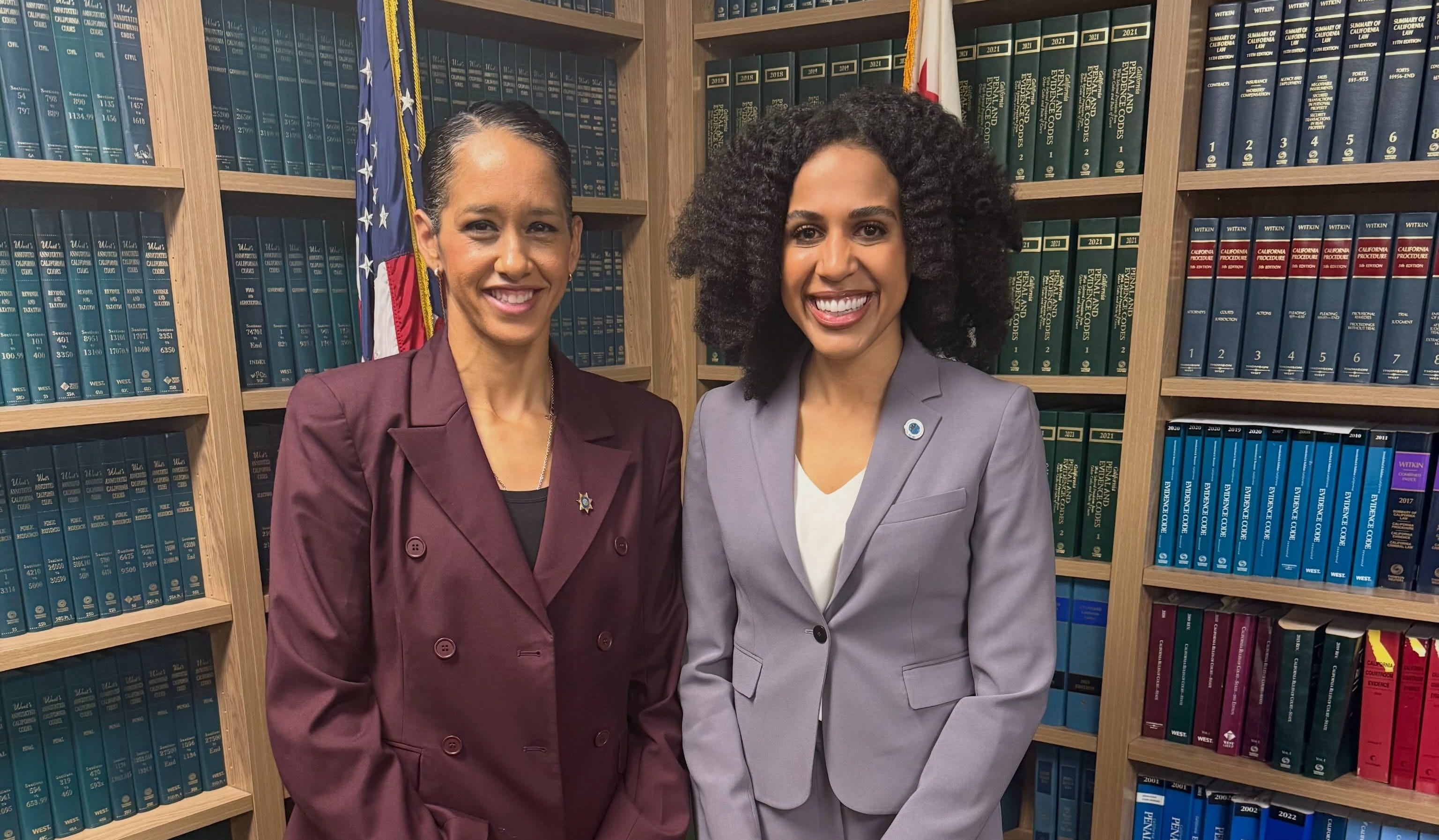
In her first year, Seattle City Attorney Erika Evans has made good on her campaign promise to revive the community court that her predecessor, Ann Davison, killed. Rebranded as the “Connection Court,” the new community court diverts low-level, non-violent offenders to drug treatment, mental health resources, and other services. Last week, public defenders distanced themselves from the Connection Court because of its restrictive eligibility requirements and proposed 90-day jurisdiction period. If someone commits another crime in that period, they’re booted from the Connection Court and subjected to normal prosecution. Evans is also implementing harsher sentencing for repeat offenders under her new High-Priority Repeat Offenses (HiPRO) program. There’s little daylight between HiPRO and Davison’s high-utilizer initiative, which Evans criticized on the campaign trail. In a recent interview on the Seattle Channel, Evans noted, “There’s not going to be a list of folks’ names on this,” but that’s a distinction without difference.
HiPRO will single out the same populations that were on the HUI list— mostly the homeless and the mentally ill — for enhanced sentencing while denying them access to potentially life-changing services. Evans, a former prosecutor, campaigned as a “progressive” alternative to Davison, but her proposed solutions are looking increasingly carceral. She’s shaping up to be more in the mold of San Francisco’s tough-on-crime district attorney Brooke Jenkins, whom she met with three weeks ago. Evans promised to bring “some of the wisdom [Jenkins] shared with us back to Seattle.” As an aside, Jenkins faced accusations of ethics violations and prosecutorial misconduct last year that the state bar handled via, get this, diversion.
Black SPD lieutenant preps second lawsuit

Seattle Police Lieutenant John O’Neil has filed a $3 million claim against the city, alleging that his subordinates conspired to damage his career by filing a series of frivolous complaints, and the city failed to stop them. The claim stems from a long-running feud between O’Neil and several officers in the public affairs and K9 units that devolved into OPA and EEO complaints and, ultimately, lawsuits. Four women officers filed a joint lawsuit accusing O’Neil and former Chief Adrian Diaz of sexual harassment. They were collectively awarded $2.6 million. O’Neil filed his own lawsuit claiming these women had filed an unprecedented number of retaliatory complaints— eight in one year—against him that were all determined to be unfounded. He says these complaints started with a dispute he had with problem K9 Officer Anthony Ducre and escalated when he joined the public affairs unit. The city settled that lawsuit for $200,000, but O’Neil is now saying that the city hasn’t done enough to mediate the dispute or stop the complaints. Officer Valerie Carson, one of the four plaintiffs in the $2.6 million lawsuit and a central figure in ex-Chief Diaz’s ouster, filed a fresh complaint in June claiming that O’Neil attempted to discredit the previously settled complaint and criticize the officers involved. O’Neil’s newest claim was in response to Carson’s complaint and the command’s decision to assign her to the same building as O’Neil.
ICE still has its hands in the DOL’s cookie jar

ICE is still using state licensing data to make arrests, according to a new report released by the University of Washington Center for Human Rights. While the Keep Washington Working Act prohibits state agencies from sharing data with ICE for civil immigration enforcement, ICE can still access driver data through multiple pathways. Between August 2025 and October 2026, ICE agents accessed Department of Licensing data 356 times through a national querying system called Nlets to make immigration arrests. Nlets, accessible through Washington State Patrol’s ACCESS platform, can provide driver and vehicle registration information tied to license plate numbers. The use of this data for civil immigration enforcement violates the DOL’s data licensing agreement with WSP and the conditions agreed to by agencies accessing the platform. ICE agents using blocked Department of Homeland Security identifiers can submit the same query with a different set of DHS identifiers to bypass the restriction. ICE is also accessing this information through 14 data brokers with DOL contracts, including LexisNexis. LexisNexis is integrated with a nationwide network of automated license plate readers. Its contract prevents it from creating ICE search records, making oversight impossible. It’s also difficult for UWCHR to fully investigate because the information about the use of data brokers is so limited. On the bright side, the DOL has closed one pathway — its driver and plate search — but ICE agents can still access DOL data through other means for the foreseeable future. The UWCHR recommends enforcement mechanisms that allow the victims of impermissible data use to obtain court injunctions and sue for damages through a private right of action
Hey, before you go…
DivestSPD is your only source for critical police coverage in the Puget Sound area and beyond. From filing public records to reading hundred-page reports, we’re putting in the hours to bring you weekly exclusive stories about cops brutalizing the public, committing crimes, and violating civil rights.
We get all our funding from ordinary people like you, so if you think this work is valuable and want it to continue, join our Ko-fi community today. Tiers start at just $5 a month.